
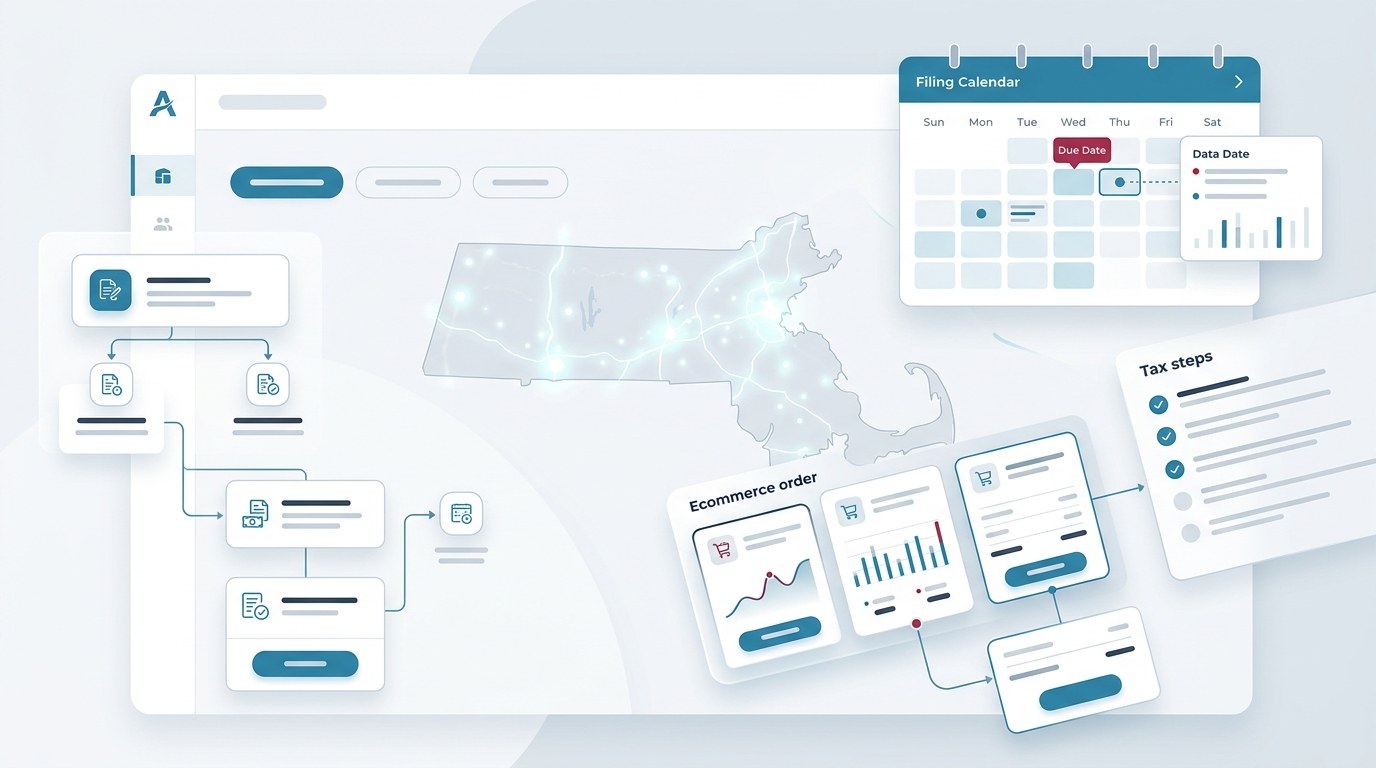
Massachusetts remote sellers should monitor sales into the state against the economic nexus threshold.
Massachusetts generally uses a 6.25% sales and use tax rate for taxable retail sales.
MassTaxConnect is the main portal for registration, filing, payment, and account management.
Quick answer for ecommerce sellers.
If you sell taxable products or taxable services into Massachusetts, you may need to register, collect, file, and remit Massachusetts sales and use tax if you have physical presence in the state or meet the remote-seller threshold. Massachusetts generally applies a $100,000 sales threshold for remote sellers.
For merchants, the practical work is to separate direct-channel orders from marketplace-facilitated orders, confirm product taxability, reconcile tax collected, and keep a filing packet that matches the MassTaxConnect return and payment confirmation.
What creates Massachusetts sales tax nexus?
Massachusetts nexus can come from physical presence, economic activity, or other in-state business connections. Physical presence may include inventory, employees, contractors, offices, warehouses, or other Massachusetts operations. Remote sellers can also create nexus through sales volume into the state.
- Physical presence: inventory, facilities, staff, agents, or in-state business activity can create obligations.
- Economic nexus: remote sellers should monitor Massachusetts sales against the $100,000 threshold.
- Marketplace activity: marketplace facilitator sales should be separated from direct ecommerce sales for reconciliation.
A strong Massachusetts nexus report starts by channel: Shopify, WooCommerce, Amazon, Walmart, Etsy, eBay, wholesale, refunds, exempt sales, taxable sales, and tax collected.
How Massachusetts registration fits into the workflow.
Massachusetts sellers use MassTaxConnect to register, manage tax accounts, file returns, and make payments. Before registering, confirm the legal entity, EIN, business address, responsible party, sales start date, product categories, account owner, and payment method.
After registration, save the permit or account information, filing frequency, login owner, payment setup, and return schedule in the same place as the monthly workpapers. The goal is to make each filing period repeatable even if a different person prepares the return.
Collection, taxability, and marketplace sales.
Massachusetts generally uses a 6.25% sales and use tax rate, but taxability matters. Some clothing, groceries for home consumption, prescription drugs, and other categories may be exempt or specially treated. Meals, lodging, and other categories can have separate rules.
- Direct ecommerce sales: orders where the merchant is seller of record and may need to collect Massachusetts tax.
- Marketplace sales: Amazon, Walmart, Etsy, eBay, and similar orders should be isolated because facilitator collection can affect reporting.
- Exempt or resale sales: resale certificates and exemption support should be retained with the filing packet.
- Product categories: clothing thresholds, prepared food, software, and digital or service categories should be reviewed before filing.
How to prepare a Massachusetts sales tax filing packet.
The filing packet should make the Massachusetts return easy to approve and easy to defend later. It should connect each return number to source reports, marketplace reports, tax collected, and payment proof.
- Export exact-period reports: pull orders, refunds, tax, shipping, marketplace collection, and exemption data for the filing period.
- Separate channels: split direct website activity from marketplace-facilitated orders.
- Map sales types: identify gross sales, taxable sales, exempt sales, resale sales, returns, and tax collected.
- Reconcile to accounting: compare platform tax, payment processor summaries, payouts, and bookkeeping totals.
- Prepare the return summary: document period, gross sales, deductions, taxable sales, tax due, reviewer, and payment amount.
- Save proof: keep the MassTaxConnect confirmation, payment receipt, source exports, and review notes together.
Massachusetts filing frequency can be monthly, quarterly, or annual depending on the account and tax collected. Use the due date and frequency assigned in MassTaxConnect.
What happens if Massachusetts filings are late or unsupported?
Late returns, late payments, unsupported exemptions, underreported direct-channel sales, and blended marketplace data can create notices, penalties, interest, and audit work. The filing packet should make the return traceable before the due date.
Before filing, review this checklist:
- Does the filing period match every source export?
- Are marketplace-collected transactions separated from direct sales?
- Are exempt and resale transactions supported?
- Do refunds, shipping, and taxability categories reconcile?
- Was the MassTaxConnect confirmation and payment receipt saved?
Massachusetts sales tax FAQ.
What is Massachusetts economic nexus?
Massachusetts remote sellers generally monitor whether sales into Massachusetts exceed $100,000 during the previous or current calendar year.
Where do Massachusetts sellers file?
Massachusetts sellers use MassTaxConnect to register, file sales and use tax returns, make payments, and manage tax accounts.
Do marketplace sales need to be separated?
Yes. Marketplace sales should be separated from direct ecommerce sales because marketplace facilitator collection can change what the merchant reports.
What is the Massachusetts sales tax rate?
Massachusetts generally has a 6.25% sales and use tax rate, with separate rules for some categories.
Can AtomicTax help file Massachusetts returns?
Yes. AtomicTax helps ecommerce merchants prepare filing-ready packets and complete standard sales tax filings for $45 per filing.
Official Massachusetts resources to check.
Need help making Massachusetts filings repeatable?
AtomicTax prepares sales tax filing packets from ecommerce reports, separates marketplace and direct-channel activity, and helps merchants keep each filing period reviewable.