
Common for higher-liability states and active accounts.
Common for lower-liability or assigned accounts.
States can change frequency based on liability or account history.
Quick answer.
Sales tax due dates vary by state and by account. Many states assign monthly, quarterly, or annual filing frequencies based on expected or historical tax liability. Some states use the 20th day after the filing period, others use the 23rd, 25th, last day of the month, or a state-specific schedule. A merchant filing in several states should not rely on a generic national due-date list without checking the account's assigned frequency.
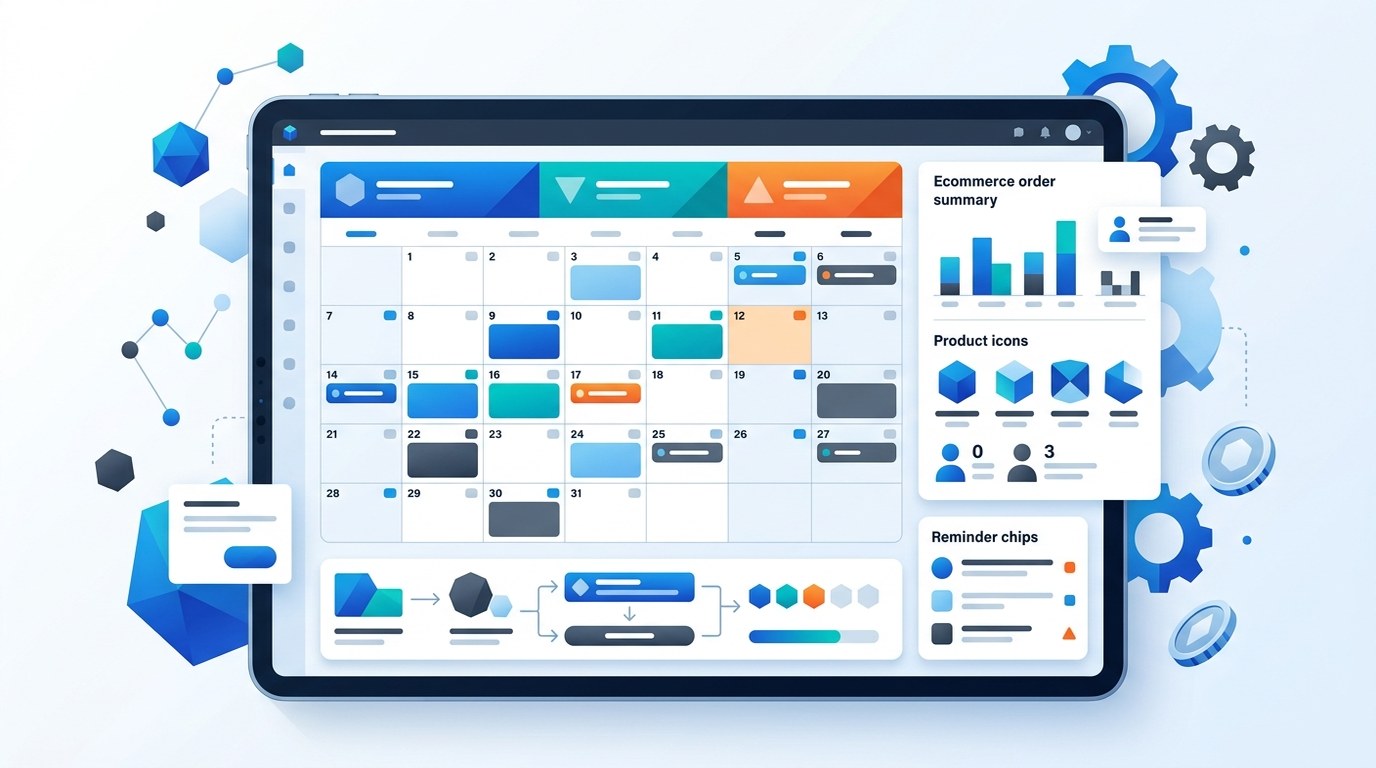
The better operating model is to maintain a filing calendar for every active state. Each calendar line should show filing frequency, return period, due date, source report deadline, reviewer deadline, payment method, portal owner, and proof archive location.
Why sales tax due dates vary.
States use different filing systems because their statutes, portals, and account assignment rules differ. North Carolina, for example, describes monthly returns as due by the 20th and quarterly returns by the last day of the month after the quarter, while Ohio returns are generally due by the 23rd day after the period. Utah publishes calendar due dates for monthly and quarterly sales and use tax periods.
Even within the same state, your assigned frequency can change. A low-liability account may be quarterly or annual, while a higher-liability account may be monthly. Late filings can also affect cadence or scrutiny.
How to build a sales tax filing calendar.
- List active states: include registered states, marketplace-only states, watch-list states, and no-filing states.
- Record account frequency: store monthly, quarterly, annual, semiannual, or state-specific cadence.
- Add internal deadlines: source reports should be due before the state deadline, not on the same day.
- Assign reviewers: every return should have a preparer and reviewer.
- Track payment method: save ACH debit, ACH credit, card, or portal payment requirements.
- Archive proof: every due date should end with confirmation and payment receipt saved.
When to prepare the filing packet.
The packet should be prepared far enough before the state deadline to resolve normal issues: missing marketplace reports, refund timing, exemption certificates, platform export delays, local-rate mismatches, or payment account problems.
- Pull source exports as soon as the period closes.
- Separate marketplace and direct sales before reviewer handoff.
- Reconcile tax collected to accounting before the return is submitted.
- Flag state-specific due dates and weekends or holidays.
- Save confirmation immediately after filing.
A due-date workflow should also include a pre-filing lock date. After that date, the team should know which source files are final, which refunds are included, who is allowed to approve changes, and how payment proof will be captured. Without a lock date, the team can keep chasing late report changes until the state deadline is already too close.
For ecommerce sellers with many states, group due dates by operating rhythm instead of treating every state as a one-off task. Monthly states can share one source-data deadline, quarterly states can share a review week, and annual states can be placed in a separate low-frequency queue so they are not forgotten.
Risk controls for due dates.
The biggest due-date risk is not forgetting every state; it is missing one state because the account frequency changed, a marketplace report was late, or a return owner assumed someone else filed it. Build the calendar around evidence, not reminders alone.
- Does every active state have an assigned filing cadence?
- Are internal report deadlines earlier than state deadlines?
- Are payment methods tested and owned?
- Do weekends and holidays roll forward according to state rules?
- Is proof saved for every filed return?
FAQ.
Are sales tax due dates the same in every state?
No. States use different due dates and filing frequencies, and the account frequency can depend on liability or registration assignment.
Should I use a generic due-date list?
Use it only as a planning aid. Always confirm the assigned frequency and due date in the state account or official state guidance.
What should be in a filing calendar?
State, account ID, frequency, period, due date, source report deadline, reviewer, payment method, and proof archive location.
Can AtomicTax manage recurring filing due dates?
Yes. AtomicTax prepares filing packets, tracks state workflows, and completes standard sales tax filings for $45 per filing.
Sources and references.
Want sales tax due dates under control?
AtomicTax helps merchants turn state calendars, source reports, review deadlines, and payment proof into a repeatable filing workflow.