Ohio substantial nexus threshold in current or preceding calendar year.
Returns are generally due by the 23rd day after the reporting period.
Ohio vendor returns are filed and paid electronically.
Quick answer.
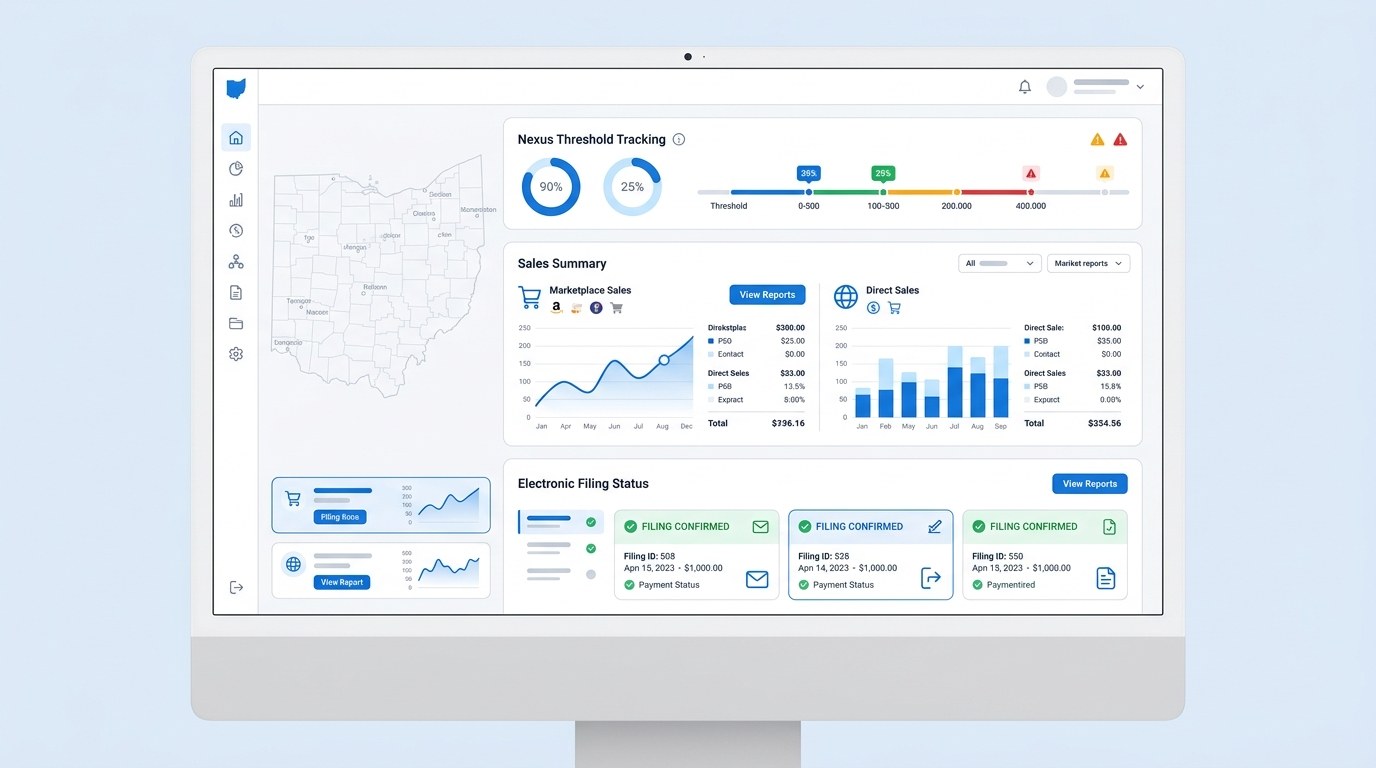
Ohio law presumes substantial nexus when a seller has more than $100,000 in gross receipts from Ohio sales in the current or preceding calendar year, or engages in 200 or more separate Ohio transactions in that period. Ohio law applies a similar $100,000 or 200-transaction test to marketplace facilitators based on their own and facilitated sales.
Ohio filing rules generally require vendors and sellers to file and remit monthly unless the tax commissioner authorizes a less frequent schedule. Ohio's administrative rule states that sales tax, seller's use tax, and consumer's use tax returns are generally due on or before the 23rd day of the month following the end of the reporting period.
What creates Ohio sales tax nexus?
- Economic nexus: more than $100,000 in Ohio gross receipts or 200 or more Ohio transactions in the current or preceding calendar year.
- Marketplace facilitator nexus: facilitators can meet the same threshold using direct and facilitated sales.
- Physical presence: inventory, employees, warehouses, events, offices, or contractors can create obligations.
- FBA and inventory: inventory stored in Ohio can create sales tax exposure.
- Taxable services: Ohio taxability can include services in addition to tangible personal property, so product mapping matters.
How Ohio registration fits into the workflow.
Remote sellers with substantial nexus generally register as sellers for Ohio seller's use tax, while in-state vendors may hold vendor licenses. The registration file should explain which account type applies and why.
Save the account number, Ohio Business Gateway or portal owner, filing frequency, payment method, marketplace status, and reviewer assignment. If the business has both direct sales and marketplace sales, the account notes should explain how those channels are handled before filing.
Collection and marketplace treatment.
Ohio collection depends on nexus, product or service taxability, customer location, and whether a marketplace facilitator collected tax. Marketplace-facilitated sales should not be blindly treated as merchant-collected tax.
- Separate direct ecommerce sales from marketplace-facilitated sales.
- Preserve destination and rate support where available.
- Track gross receipts, taxable sales, exempt sales, and tax collected.
- Save exemption certificates and resale documentation.
- Reconcile refunds and tax refunds to the correct filing period.
How to prepare an Ohio sales tax filing packet.
- Export exact-period reports: direct orders, marketplace sales, refunds, exemptions, tax collected, and accounting data.
- Confirm filing frequency: Ohio generally defaults to monthly unless a less frequent interval is authorized.
- Separate channels: split marketplace facilitator sales from direct merchant-collected sales.
- Map Ohio totals: gross sales, taxable sales, exempt sales, tax collected, refunds, and deductions.
- File electronically: submit through the appropriate Ohio electronic process.
- Save proof: return confirmation, payment receipt, source exports, and reviewer notes.
Risk controls for Ohio.
Ohio risk often comes from missing the $100,000 or 200-transaction threshold, using the wrong account type, duplicating marketplace sales, or filing after the 23rd-day deadline. The packet should also support any exempt sales and explain period adjustments.
- Was nexus reviewed for current and preceding calendar year?
- Was the correct seller or vendor account used?
- Were marketplace sales separated?
- Does the packet match the reporting period?
- Are exemption and resale records saved?
- Was electronic confirmation archived?
FAQ.
What is Ohio economic nexus?
Ohio presumes substantial nexus when a seller has more than $100,000 in Ohio gross receipts or 200 or more Ohio transactions in the current or preceding calendar year.
When are Ohio sales tax returns due?
Ohio rules generally require returns on or before the 23rd day of the month following the end of the reporting period.
Are Ohio returns monthly?
Ohio generally requires monthly filing unless the tax commissioner authorizes a less frequent interval, such as semiannual filing for lower-liability accounts.
Can AtomicTax help file Ohio returns?
Yes. AtomicTax can prepare Ohio filing packets and complete standard sales tax filings for $45 per filing.
Sources and references.
Need Ohio filings to stay controlled?
AtomicTax helps merchants separate Ohio direct and marketplace sales, prepare filing packets, and archive return proof.